USMCA Threatens Nearshoring: Will Regulatory Uncertainty Halt Jalisco’s 20% Industrial Growth?
Story summary: The upcoming USMCA review is about to freeze billions of dollars in industrial projects across Mexico. Jalisco just marked a 20% growth in corporate logistics infrastructure over the last three years. It is the magnet of the Bajío-Occidente region due to the extreme saturation at the northern border. But there is a severe problem: shifting from 15-year tariff guarantees to potential annual reviews destroys corporate certainty. The data already shows a slowdown: out of 114 billion dollars announced nationwide for nearshoring, only 14.7% has been physically built. Capital demands long-term legal security. Will Jalisco maintain its cash flow against new pressure from the United States?
$23.59 billion USD: Record Foreign Direct Investment (FDI) captured by Mexico in Q1 2026, representing a 10.4% year-over-year increase according to the Ministry of Economy.
20% sustained growth: Expansion of the industrial sector inventory in Jalisco over the past three years, driven by logistics infrastructure as reported by the Mexican Association of Real Estate Professionals (AMPI) Guadalajara chapter.
14.7% physical execution rate: Materialization rate validated by the "Teseo Method" of the $114.7 billion USD in investments announced between 2023 and 2025. Only $16.89 billion USD was operational by May 2026.
23.70% market share: Current industrial quota of the Bajío-Occidente region, consolidating itself as the primary alternative amidst critical vacancy rates (1% to 3%) in northern Mexico.
$30.00 billion USD: Estimated additional costs the Mexican automotive sector would face if the US revokes tariff preferences due to the "China Factor" in rules of origin.
The Macroeconomic Environment: The Investment and Execution Paradox
According to projections by the Bank of Mexico, the country is currently traversing the peak of corporate relocation (nearshoring), a strategic window set to last until 2030. This capital flow has displaced China as the United States' top trading partner, yielding a bilateral trade volume of $873 billion USD and propelling Mexican exports to a historic peak of $664.06 billion USD (INEGI, 2025). During Q1 2026, FDI reached a quarterly high of $23.59 billion USD, with nearshoring accounting for 58% of the total.
However, this financial volume has not directly translated into internal dynamism. The GDP contracted by 0.6% in Q1 2026, with maximum growth projections capped at 1.6%. This deceleration is linked to two structural indicators: 67.8% of the FDI corresponds solely to the reinvestment of profits, and public investment suffered a 26% contraction. This gap is verified through the "Teseo Method", a satellite and fiscal assessment demonstrating that out of the $114.7 billion USD previously announced, the local economy has only physically constructed and inaugurated 14.7% ($16.89 billion USD).
Jalisco: A Logistics Refuge Against Border Saturation
In terms of corporate infrastructure, the Northern region leads with a 54.30% market share. Specifically, the Monterrey submarket holds 17.9 million square meters and a 94% absorption rate concentrated in Santa Catarina and Apodaca. However, a severe vacancy rate of 1% to 3% obstructs the immediate settlement of new operations.
As a technical response, the Bajío-Occidente region now captures 23.70% of the industrial dynamics. Jahaziel Omar Castañeda González, president of AMPI Guadalajara, details that Jalisco increased its industrial footprint by 20% over the last 36 months. The state mitigated its lack of border proximity by establishing an efficient logistics network integrating the Guadalajara International Airport, expansions on the macro-bypass (macrolibramiento), and specialized industrial corridors.
The USMCA and Long-Term Real Estate Destabilization
The highest vector for financial risk heading into the latter half of 2026 is the scheduled review of the USMCA on July 1. Jenny Althair Rivas Padilla, national president of AMPI, specifies that transitioning from a regulatory framework with a 10-to-15-year guarantee to a model of annual evaluations alters return-on-investment projections. In the industrial real estate and capital raising sectors, annual assessments force corporations to delay massive physical constructions due to constant tariff risks.
The customs negotiation features three scenarios: full extension to 16 years (until 2042), volatile annual reviews, or complete termination. The main friction point is the Regional Value Content (RVC). The United States demands strict isolation from Chinese inputs in steel and aluminum—a factor that puts the Mexican-based automotive industry at risk of fines or lost tariff preferences amounting to $30 billion USD.
Structural Costs: Energy, Water Regulations, and Talent
Beyond the international framework, local operations encounter measurable barriers detailed in sector balances:
1. Energy: The Ministry of Energy and the Federal Electricity Commission (facing a 16.7% budget cut) project a 48,000 MWh supply deficit. This explains why 91% of industrial parks report electrical failures and 40% endure natural gas shortages.
2. Water Resources: The 2025 General Water Law eliminated exemption certificates for liquid treatment and blocked the transfer of private concessions. This elevated the Total Cost of Ownership for industrial plants nationwide, while Mexico simultaneously carries a water debt of 986 million cubic meters with the US government.
3. Talent 4.0: 68% of manufacturing firms face difficulties recruiting specialized engineers in automation, AI, and robotics.
Additionally, the assimilation of USMCA Chapter 24 (Environment) clashes with a 4% budget cut to SEMARNAT in 2026, resulting in a 53% backlog in environmental impact assessments (540 pending processes), freezing the issuance of corporate permits across the board.
Sources
Related stories

The Traction of Advanced Manufacturing: Jalisco's Exports Surge 106.6% Year-Over-Year.
Jalisco just displaced the border powerhouses to secure second place nationwide in total exports.The official volume reached 17.37 billion dollars in just the first quarter of 2026, according to INEGI data.This represents a 106.6 percent year-over-year surge. Six times higher than the national growth average. Capital follows the tech ecosystem. The electronics industry concentrated 79 percent of this financial influx. Driven by advanced manufacturing and semiconductor design, Jalisco now accounts for 11 percent of all foreign trade in Mexico without sharing a border.
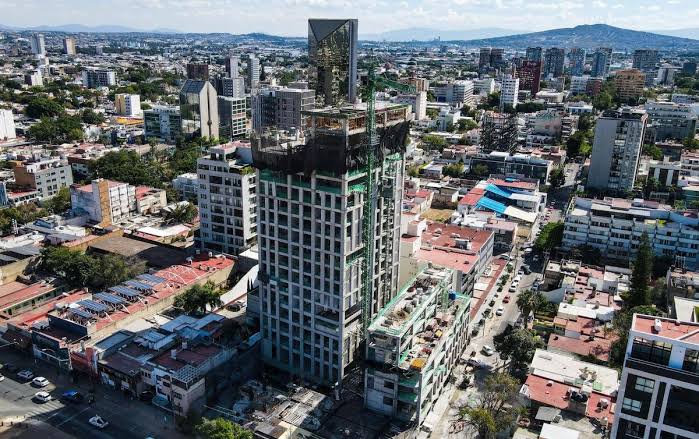
Financial Impact of the 2026 World Cup: Guadalajara Records 67% Occupancy, Trailing Behind FIL Metrics
Guadalajara stagnates at 67% hotel occupancy, falling short of the International Book Fair's performance metrics. The national projection points to 65 billion pesos in economic revenue. However, capital failed to consolidate in the corporate host cities. Monterrey recorded 65%. Mexico City reached 78%. Tourist flow shifted toward alternative vacation destinations. Out of the total revenue, 5 billion comes from ticketing across 13 matches. Yet, a sector survey shows barely 11% of businesses increased their sales. Meanwhile, the formal ecosystem loses liquidity. Piracy drains 63 billion pesos annually. All metrics reported by Concanaco Servytur.
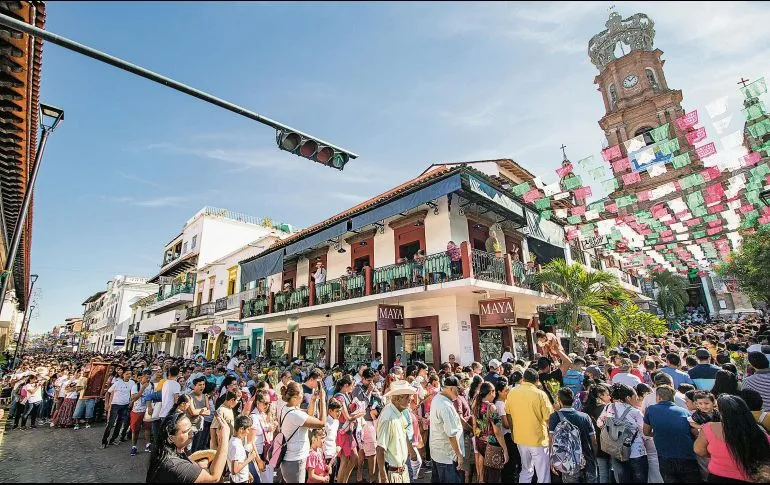
Jalisco Reshapes Corporate Leadership: Guadalajara and Puerto Vallarta Lead Capital Attraction in Mexico
Guadalajara just dethroned Monterrey in the war for corporate capital. Jalisco is now the only state in the country with three cities dominating the investment map. Guadalajara crushes it in tech and talent. It’s the new powerhouse for major metropolises. Puerto Vallarta is no longer just tourism. It’s the undisputed champion of mid-sized cities, beating Veracruz. And Ocotlán locks down regional logistics. The secret: direct connectivity to the Port of Manzanillo, an aggressive innovation ecosystem, and operational certainty.